
 i
What to see
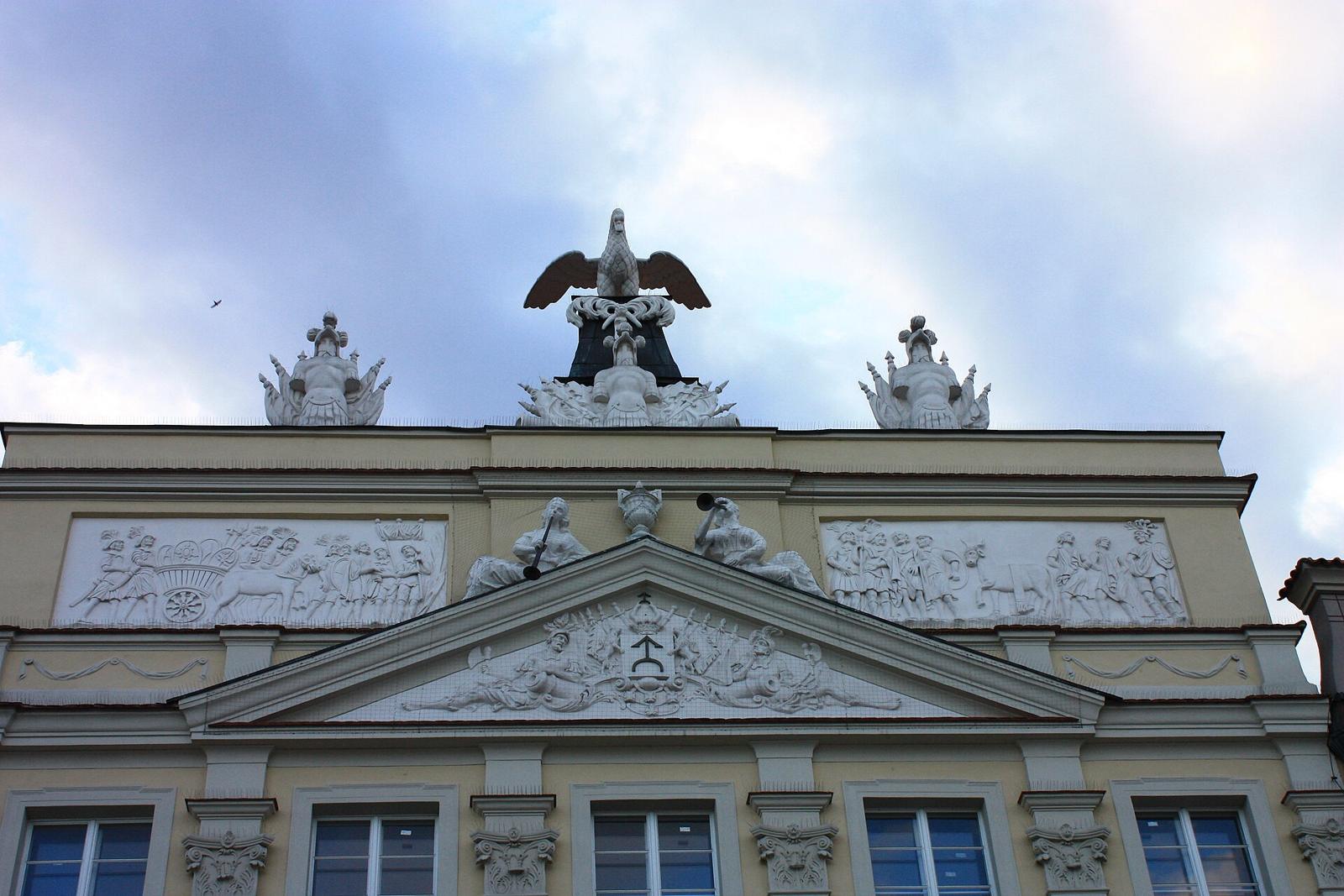
The imposing east façade divided by pilasters in the Corinthian order.
The pelican on the obelisk at the top of the attic. In heraldry it symbolises sacrifice, and in the time of the partitions it became a symbol of Polish resistance.
History
In the 19th century the palace was a centre of the cultural and political life of Poles. In the Red Room there were meetings connected with the uprisings of 1830, 1848 and 1863, as well as exhibitions, concerts and lectures, including by the philosopher August Cieszkowski.
Today it houses institutes of the Polish Academy of Sciences and a branch of the Kórnik Library.