
 i
History
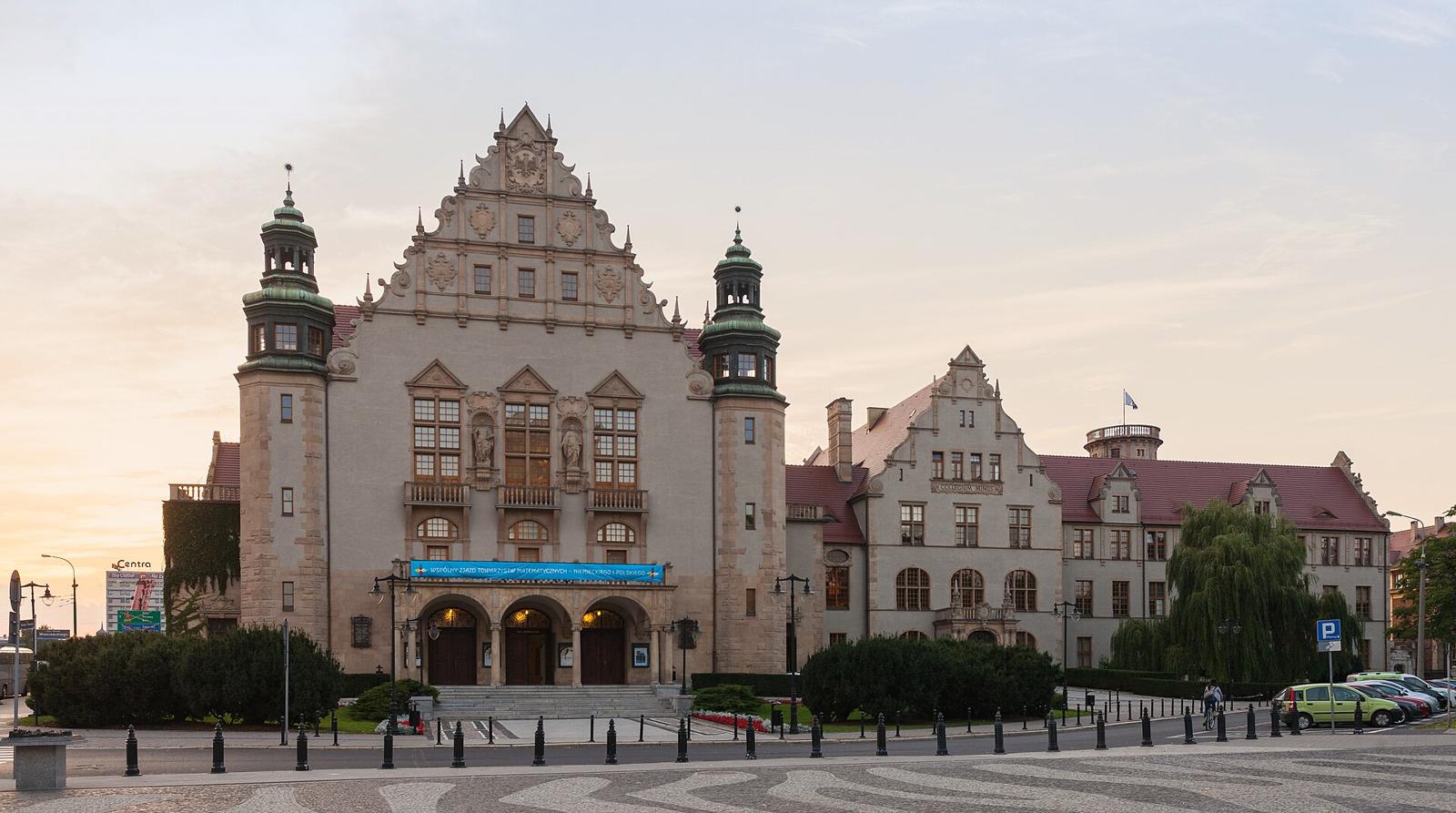
Edward Fürstenau's design was made in 1905–1906. Construction work lasted from spring 1907: the teaching part was handed over on 1 November 1909, and the Aula was solemnly opened on 18 January 1910.
The building was a demonstration of the German presence in the face of Poznań's Polish community. It served the Academy for a little over four years, because during the First World War it housed a military hospital.
In April 1919 the Polish authorities handed the building to the university being created. The name Collegium Minus was proposed on 5 April 1919 by Prof. Michał Sobeski, and on 7 May 1919 the University of Poznań was solemnly opened.
What to see
The Neo-Renaissance façade with porticoes and tall gables on the ul. Wieniawskiego side.
The University Aula: the hall is about 580 m², 33 m long and 17.5 m wide, and 14 m high above the stage. It is famous for its acoustics. Originally it was dominated by a 35-stop organ by Völkner of Bydgoszcz.
The Lubrański Hall, called the Small Aula, with a copy of Jan Matejko's painting “The Founding of the Lubrański Academy” (the original is from 1886).
Good to know
This is a working university building, so its interiors are not visited like a museum. The easiest way into the Aula is to attend a Poznań Philharmonic concert or another event. The repertoire is on the “Theatres and concerts” page.