
 i
History
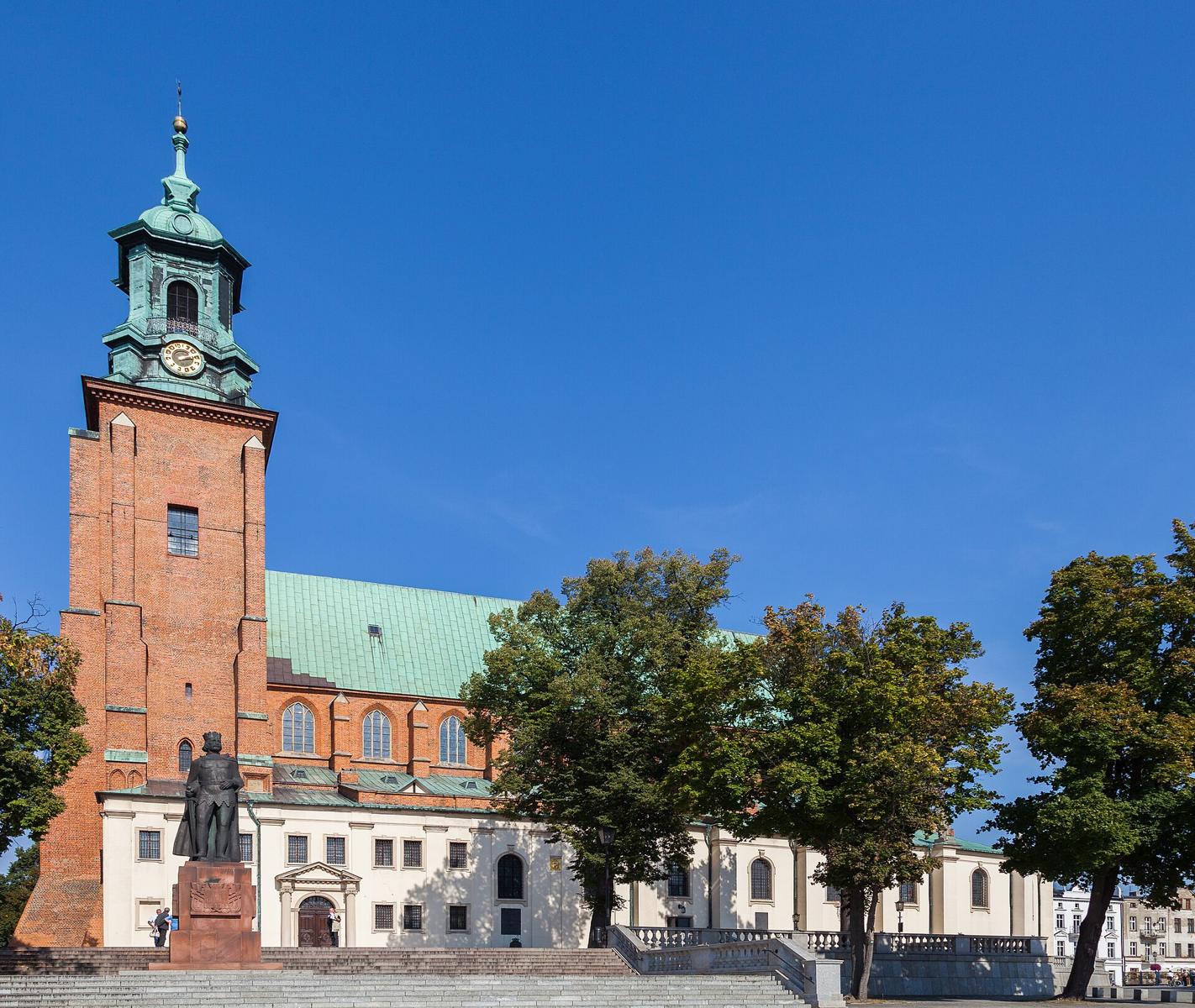
The first church on the hill was built under Mieszko I, before 992. Its remains survive in the cathedral's crypts.
In March 1000 Emperor Otto III came to the tomb of St Adalbert. At the Congress of Gniezno he met Bolesław the Brave, and the first Polish church metropolis was established at that time.
The Gniezno Doors are Romanesque bronze doors, made probably between 1175 and 1200, under Duke Mieszko III the Old. The reliefs tell the life and martyrdom of St Adalbert.
What to see
The Gniezno Doors. Entry to them is with a guide, included in the ticket price.
The cathedral crypts with remains of the oldest churches, also with a guide included in the ticket price.
A viewing terrace on the tower (from May to October).
The Museum of the Gniezno Archdiocese with the cathedral treasury. The most valuable item is a golden chalice of the 10th century, known as the chalice of St Adalbert.
Good to know
On Sundays the cathedral, the museum and the viewing terrace are closed to visitors.
The ticket office closes 30 minutes before the sites close. The pass covers the Doors, the crypts, the tower, the museum and the interior of the cathedral with an audio guide.
About 700 m from the cathedral (as the crow flies) is the Museum of the Origins of the Polish State. Both places are easy to see in one day.