
 i
History
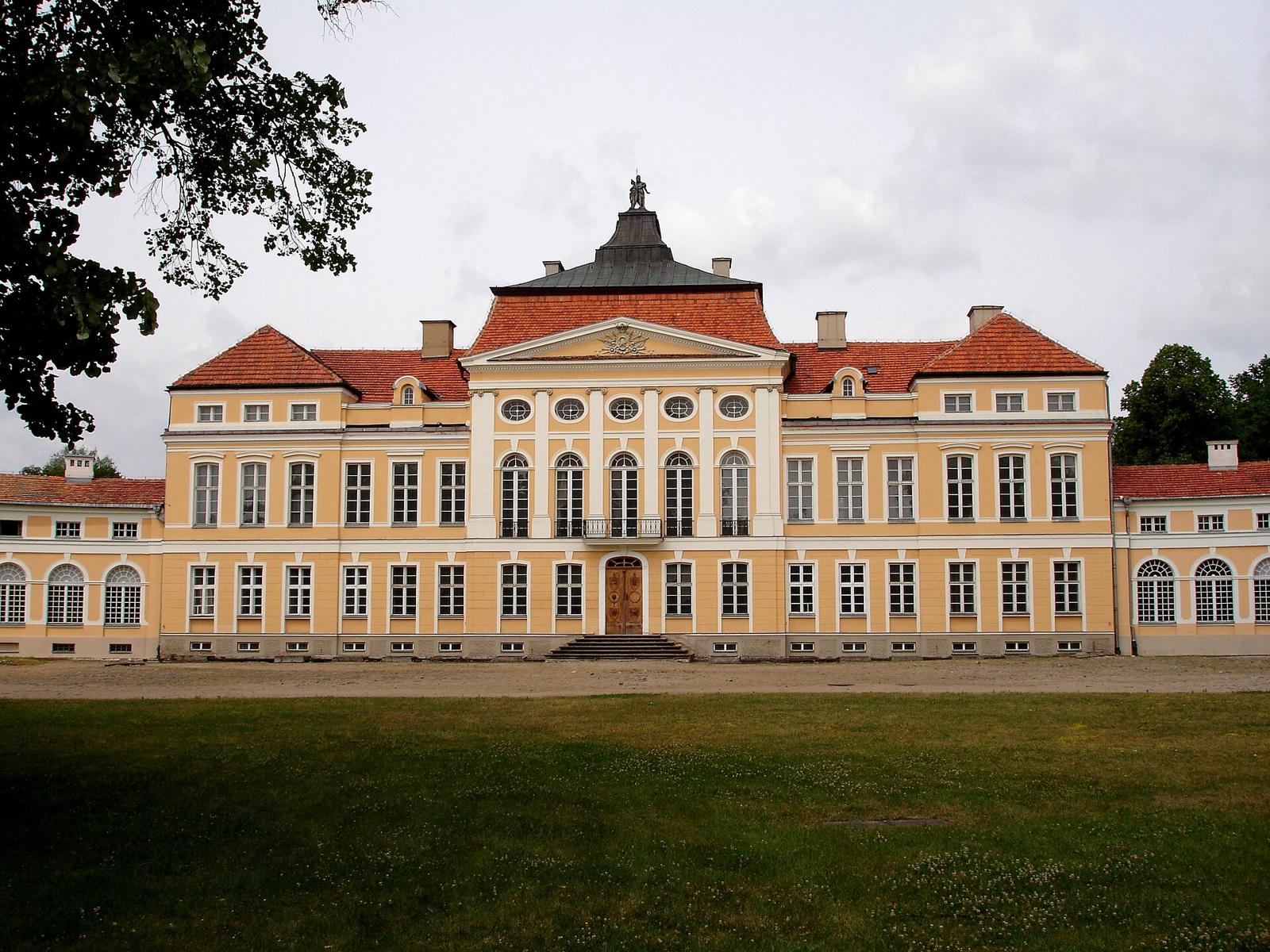
The late Baroque palace stands between the courtyard and the garden, and semicircular galleries connect it with the outbuildings. Behind the palace is a French garden.
In 1817–1820 Edward Raczyński added a landscape park and the church of St Marcellinus with the family mausoleum, modelled on the Roman temple Maison Carrée in Nîmes. In 1910 a picture gallery was created, regarded before the war as the best collection of contemporary painting in the Polish lands.
The last heir, Edward Bernard Raczyński, was President of the Republic of Poland in exile. In 1990 he founded the Raczyński Foundation and gave it the palace and park, which are still looked after by the National Museum.
What to see
The palace with the interiors of the Raczyński family.
The painting gallery, which shows about 250 works from the collection of Edward Aleksander Raczyński. Among them are “The Maid of Orléans” by Jan Matejko and canvases by Jacek Malczewski, Julian Fałat, Olga Boznańska and Leon Wyczółkowski.
The London study of Edward Bernard Raczyński and the gallery of ancestors in the north wing, and the coach house.
The garden and park with centuries-old oaks. In the Warta valley around Rogalin grows the largest concentration of old pedunculate oaks in Europe.
The church of St Marcellinus with the Raczyński mausoleum, open on Saturdays 13:00–17:00 and Sundays 12:30–17:00.
Good to know
The daily quota of tickets to the palace is limited, so in the season they may run out. The museum advises buying a ticket online through the ToBilet service.
Every Tuesday admission to the museum, garden and park is free (the free ticket must be collected at the ticket office).
The garden and park are entered only from the courtyard, with a ticket. A ticket to any exhibition includes entry to the park.
The ticket office is open Tue–Sun 8:30–15:30, and on Saturdays and Sundays in July and August 9:30–16:30. The office closes for a break at 12:30–12:45.