
 i
Important before you go
The visiting season lasts until 30 November 2026. From 1 December to 13 February the castle is closed to visitors.
History
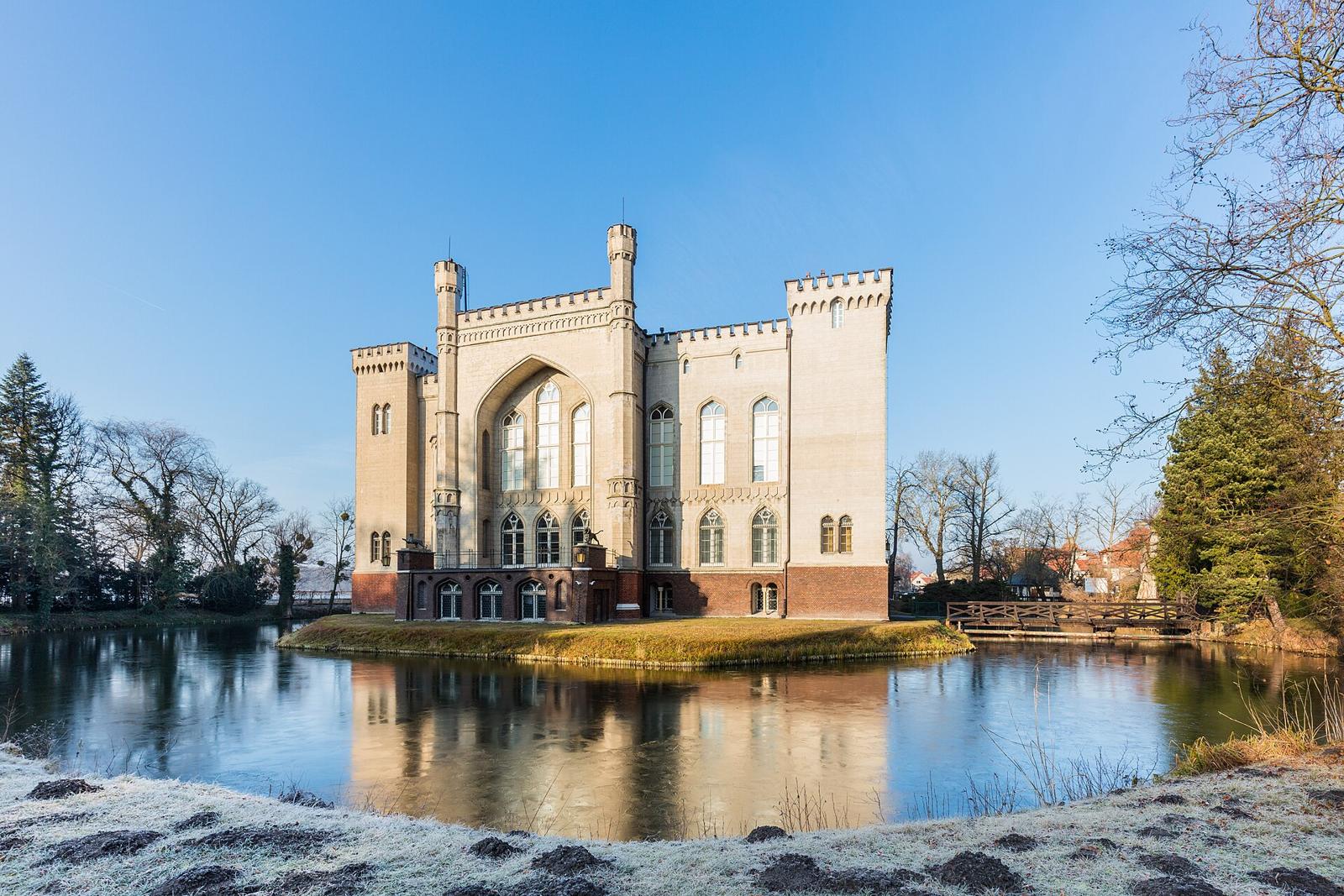
The oldest mention of the castle dates from 1426. Over the centuries it belonged to great Greater Poland families: the Górkas, Czarnkowskis, Grudzińskis, Działyńskis and Zamoyskis. In 1574 it hosted Henry of Valois on his way to be crowned in Kraków.
In the 18th century Teofila Szołdrska-Potulicka, née Działyńska, lived here. Her portrait in a white dress, which still hangs in the castle, gave rise to the legend of the White Lady, one of the most famous castle ghosts in Poland.
In the 19th century Tytus Działyński rebuilt the castle in the English Neo-Gothic style. In 1826 he founded the Kórnik Library, which became part of the Polish Academy of Sciences in 1953. Since 2011 the castle and park complex has been a Historic Monument of Poland.
What to see
The castle interiors with furniture, paintings and mementoes of the former owners, including the portrait of the White Lady.
The library's collections are among the oldest and richest in Poland. They include manuscripts by Chopin, Mickiewicz and Napoleon Bonaparte.
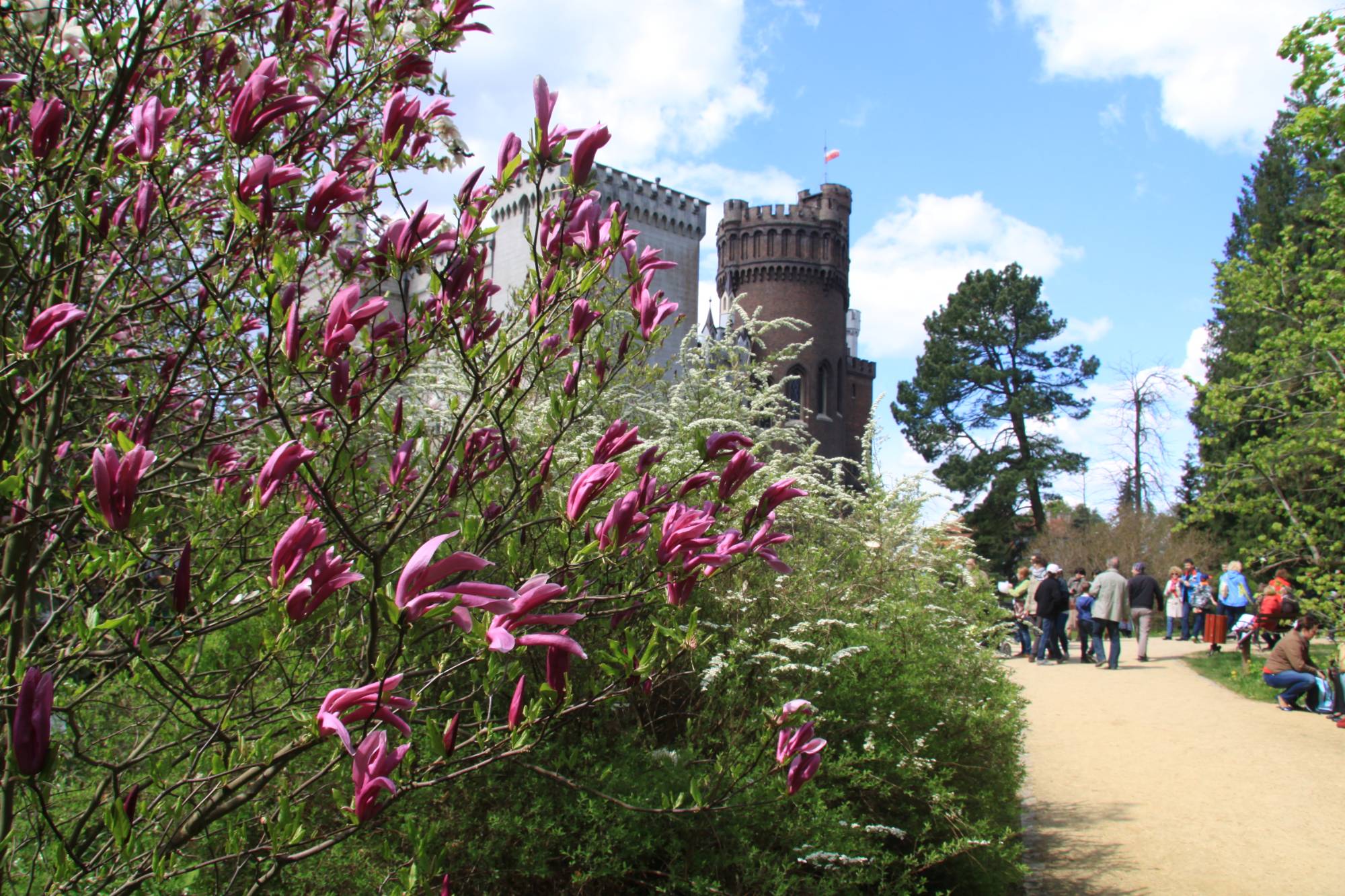
Right next to the castle is the Kórnik Arboretum, which is worth seeing on the same visit. Separate tickets apply there.
Good to know
You can tour the castle with the free “Zamek w Kórniku” app (you need your own headphones) or with an audio guide hired at the ticket office for PLN 15. The ticket office also has a free field game for children, in which Tytus Działyński himself is the guide.
Prams cannot be taken into the castle, and there is nowhere to leave one on site. There is a lift for people with disabilities.
Photographs for private purposes may be taken free of charge, without flash or a tripod.