
 i
Important before you go
From 2 November to 20 December the reserve is open only from Tuesday to Friday, 9:00–15:00. On Saturdays and Sundays, and from 21 December to 2 March, it is closed.
History
The stronghold stood on a peninsula of a former lake on the Moskawa river and was an important centre of power, military and religion. The oldest known small fort was built in the 860s. At the end of the 920s the fortifications were extended into a two-part fortress with a stone-faced rampart.
According to Gallus Anonymus the stronghold supplied Bolesław the Brave with 300 armoured warriors and 2,000 shield-bearers. At the beginning of the 11th century a church of St John the Baptist was built here, with a raised chancel and a reliquary crypt.
In 1038 the Czech duke Bretislaus I captured and burned the stronghold and moved its inhabitants to Bohemia. Giecz remained the seat of a castellany and a meeting place of dukes, among others in 1253. In the first half of the 13th century it was destroyed in the fighting between Henry the Bearded and Władysław Odonic, and its people left it at the turn of the 13th and 14th centuries or at the beginning of the 14th century.
What to see
In the southern part of the stronghold lie the foundations of one of the oldest palace complexes in Polish lands (a palatium). For reasons unknown, it was never completed.
In the northern part stands a wooden parish church of St John the Baptist from the 18th century, partly built on the stone remains of the stronghold church from the beginning of the 11th century.
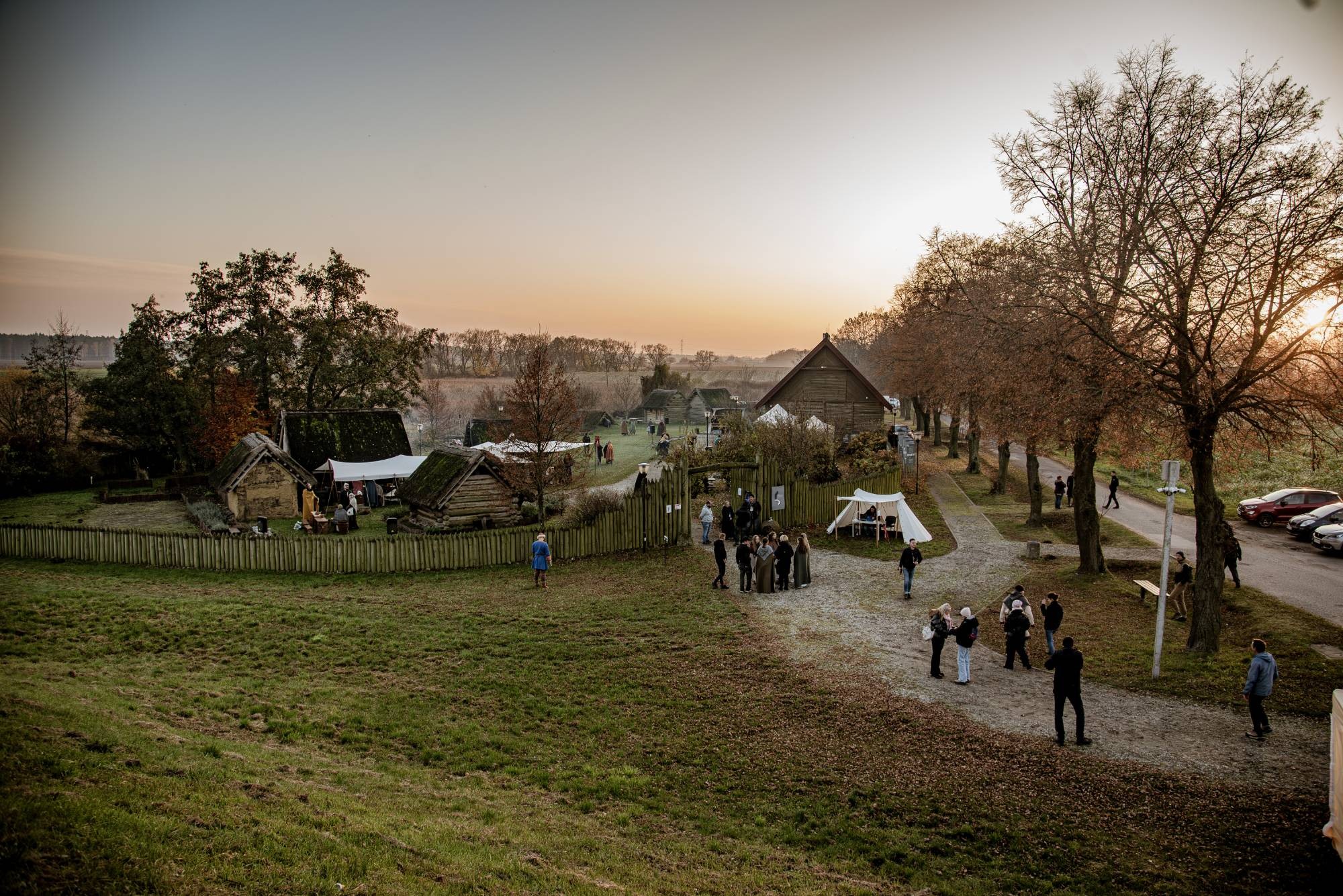
The reserve has a reconstruction of an early medieval settlement with a building for temporary exhibitions. Open-air events and educational classes are held there.
A famous spiked helmet (szyszak) was found at Giecz, which Jan Matejko painted in his portrait of Bolesław the Wrymouth. The museum's collection also includes luxury items that point to the high rank of the ducal stronghold.
Good to know
Tickets are sold until 30 minutes before the exhibition closes, and tickets with an audio guide until an hour before closing. On Tuesdays admission is free, and so is parking.
You can tour the grounds with the quests “Following the Piasts” and “Following Giecz's buildings”, rhymed stories with riddles to solve on your own.
A guided tour costs PLN 100 in Polish and PLN 120 in a foreign language, and the fee covers a group of up to 25 people. The museum's opening-hours table does not list Mondays.
Sources (in Polish)
- Muzeum Pierwszych Piastów na Lednicy: godziny otwarcia i ceny biletów 2026 (grafika dla Gieczu)
- Muzeum Pierwszych Piastów na Lednicy: Giecz
- Muzeum Pierwszych Piastów na Lednicy: historia grodu w Gieczu
- Muzeum Pierwszych Piastów na Lednicy: oferta dla Gieczu (questy)
- Muzeum Pierwszych Piastów na Lednicy: kontakt